
Sports Betting Data Tracking: Maximize ROI with Analytics
Ever placed a bet fueled by gut feeling, only to watch it crumble before your eyes? We’ve all been there. Those frustrating losses often stem from a simple problem: lack of organized information. Imagine instead, having a clear picture of your betting history, identifying your strengths and weaknesses, and making informed decisions based on concrete data. No more guessing, just strategic plays.
This article is your playbook for mastering betting data tracking. We’ll reveal actionable steps that enable you to take control of your sports betting results, transforming raw data into a powerful tool for maximizing your ROI. Learn how to track key metrics, analyze trends, and refine your betting strategy for consistent profitability. Get ready to ditch the guesswork and embrace data-driven success.
Why Tracking Your Betting Data is Crucial
In the thrilling world of sports betting, luck undeniably plays a role. However, consistently profitable betting hinges on strategy, discipline, and, most importantly, data. Tracking your betting data isn’t just a meticulous habit; it’s the cornerstone of informed decision-making and long-term success. Think of it as the ultimate tool for transforming hunches into calculated advantages.
One of the most significant benefits of tracking your betting data is a crystal-clear understanding of your profit and loss. It’s easy to get caught up in the excitement of wins, but a comprehensive record reveals the complete picture. Are you truly making money, or are your losses overshadowing your victories? By meticulously recording each bet, you gain undeniable insight into your financial performance.
Beyond the bottom line, tracking your bets exposes your strengths and weaknesses. You might discover you excel at predicting outcomes in a particular sport or bet type. Conversely, you might find you consistently lose money on a seemingly promising strategy. This self-awareness is invaluable. It allows you to focus on your areas of expertise and refine or eliminate less successful approaches. I personally found that, despite my perceived expertise in a particular league, I was consistently losing money on over/under bets. This realization prompted me to reassess my strategy and ultimately shift my focus to other, more profitable areas.
Furthermore, the data you collect directly fuels better decision-making. Instead of relying on gut feelings or biased opinions, you can base your bets on concrete evidence. Bettors who diligently track their bets are statistically more likely to achieve long-term profitability. This is because they are equipped with the knowledge to identify trends, assess risk, and make informed choices aligned with their individual betting profile.
Finally, tracking your betting data is intrinsically linked to responsible bankroll management. By understanding your win rate, average stake, and risk tolerance, you can develop a sustainable betting strategy that protects your capital. This prevents impulsive decisions, mitigates potential losses, and ensures you can enjoy the thrill of betting without jeopardizing your financial well-being. In essence, tracking transforms betting from a gamble into a strategic investment.
Essential Metrics to Track
Core Metrics
To truly understand and improve betting performance, tracking certain core metrics is essential. These metrics provide a clear view of wins, losses, and overall profitability, and it’s impossible to make informed decisions without them. Profit/loss tracking is the most fundamental, simply recording how much money is won or lost on each bet. Stake management involves tracking the size of each bet relative to the total bankroll. This helps to control risk and prevent large losses. Odds analysis involves recording the odds at which each bet was placed. This allows bettors to identify profitable odds ranges and betting markets.
Tracking these metrics allows for initial performance baselining. For instance, a bettor might discover they have a high win rate on underdog bets but consistently lose money due to poor stake management. By analyzing win rate in conjunction with average odds and stake size, a bettor can identify this blind spot, adjust their strategy, and improve overall profitability. Analyzing these metrics, both in isolation and in tandem, is the first step towards informed betting.

Choosing the Right Tracking Method
When it comes to tracking your sports betting performance, you essentially have two main paths: the familiar territory of spreadsheets or the specialized world of betting tracker apps. Both have their strengths and weaknesses, and the best choice depends on your betting style, volume, and tech-savviness.
Betting spreadsheets, often built using tools like Google Sheets or Excel, offer a highly customizable and cost-effective solution. Ready-made betting spreadsheet templates are available widely and can be altered. The downside is the manual data entry required, which can become time-consuming and error-prone as your betting activity grows. I started with a spreadsheet to track my wagers, but as my betting volume increased, I needed a more automated approach.
Betting tracker apps, on the other hand, are designed specifically for the purpose. They often boast features like automatic data import from various sportsbooks, customizable metrics, and visual dashboards. The prices of these apps can vary widely. Keep in mind features such as automated tracking, the range of metrics offered, and the ability to integrate with different sportsbooks are important to consider when weighing the costs.
Setting Up Your Tracking System
The first step to mastering sports betting analytics involves setting up a robust tracking system. This is where you’ll meticulously record every bet, transforming raw data into actionable insights. You have two primary options: a trusty spreadsheet or a dedicated sports betting app. The choice depends on your comfort level and the degree of automation you desire.
Spreadsheet Setup
If you opt for a spreadsheet, start by creating columns for each relevant metric. Essential columns include date, sport, bet type (e.g., moneyline, spread, over/under), the specific event, the sportsbook used, stake, odds, and the eventual outcome (win/loss/push). For calculating your performance, include columns with formulas that automatically calculate your ROI, profit/loss, and strike rate. Mastering these metrics requires accurate data from your bets. To minimize errors, use data validation features (like dropdown menus for bet types or sportsbooks). This keeps your data clean and consistent, which is useful for later analysis.
App Setup
Sports betting apps offer a more streamlined approach. Most apps allow you to connect directly to your sportsbook accounts, automatically importing bet details. Focus on customizing your dashboard to display the metrics most relevant to your strategy. Also, explore the app’s alerting features. Setting up notifications for specific events or when you reach certain profit/loss thresholds can help you stay disciplined and informed.
Regardless of the method you choose, consistent and accurate data entry is critical. Regularly update your tracking system after each bet settles. This ensures that your analysis is based on a complete and reliable dataset. With a solid tracking system, you’ll be well-equipped to identify patterns, evaluate your betting strategies, and make data-driven decisions.
Analyzing Your Data for Insights
Data analysis is the compass that guides informed betting decisions. By meticulously examining your tracking data, you can unearth hidden betting trends, celebrate your strengths, and confront your weaknesses head-on. This process transforms raw numbers into actionable intelligence, allowing you to refine your strategies and maximize your profitability.
Begin by asking yourself critical questions. Which sports consistently yield the highest returns? Are there specific bet types – perhaps over/unders or parlays – that are consistently profitable? Conversely, identify the areas where you’re bleeding money. Are certain leagues or teams your Achilles’ heel? Uncover when your profitable. Also, by analyzing data, you can find the perfect time to place bets.
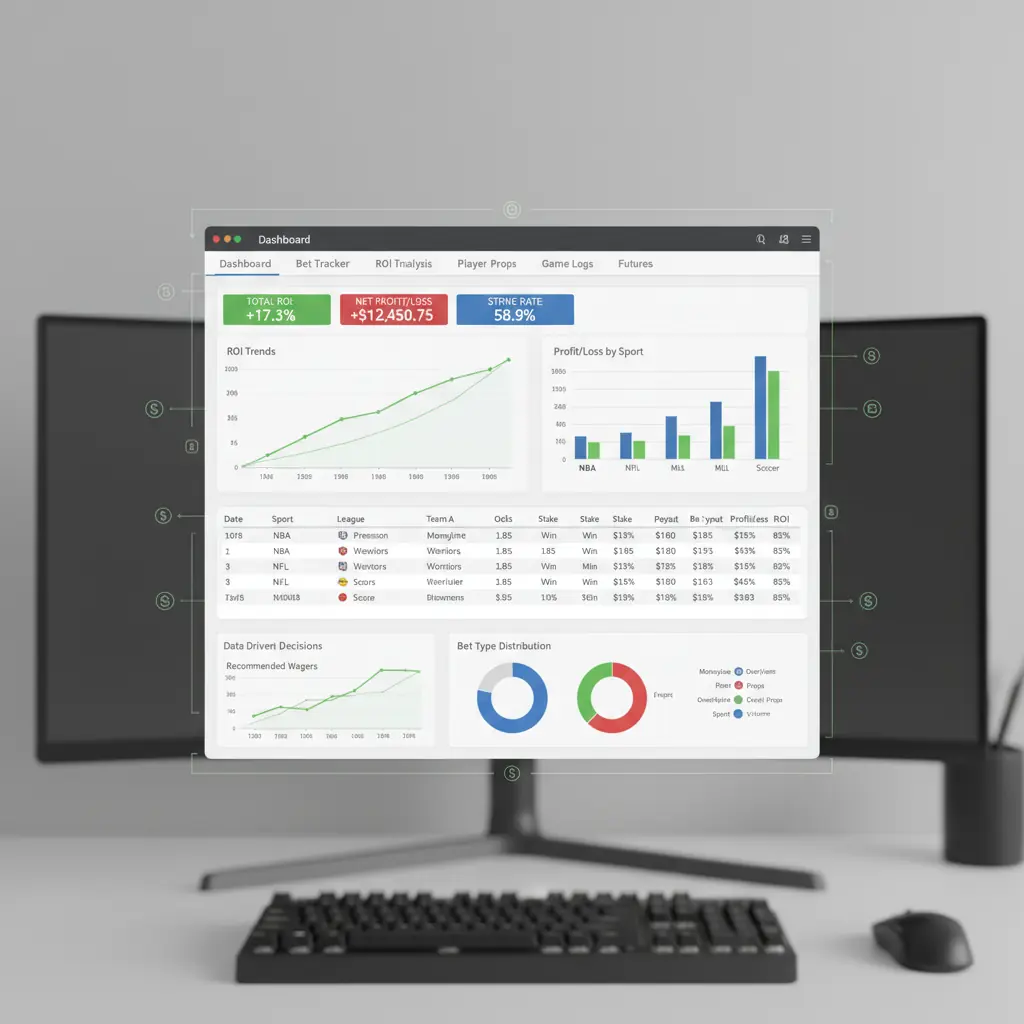
For example, imagine your data reveals a consistent profit in NBA games, specifically when betting on point spreads for home underdogs. This insight suggests a potential strength. Conversely, if your NHL moneyline bets are consistently losing, it’s a clear area for re-evaluation. Visualizing your data through charts and graphs can further illuminate these trends, making them easier to grasp and act upon. A simple bar graph comparing ROI across different sports can instantly highlight your most (and least) profitable markets. A line graph tracking your performance with a specific bet type over time can reveal whether your strategy is improving or deteriorating.
Data-driven analysis can also steer you away from a mess. It’s difficult to see the whole picture without tracking and analyzing. Every bet is important to inspect, whether you win or lose, each one teaches you something new about your technique.
Identifying High-Value Opportunities
The ability to pinpoint high-value opportunities is where data analysis truly shines. These opportunities arise when your assessment of a betting scenario diverges significantly from the implied probability reflected in the odds. By recognizing patterns in your data, you can identify factors that consistently create these discrepancies.
For example, consider the impact of weather. If your data indicates that you consistently profit from betting the under in baseball games played in windy conditions, you’ve identified a valuable edge. It is important to consider all elements. Another thing to look for can be certain timing conditions. For example, your personal data may show that placing bets later improved the result of betting outcome. Maybe due to getting more information right before the game.
This edge is a perfect way to maximize profit. Recognizing these patterns requires a keen eye and a willingness to challenge conventional wisdom. It demands a deep understanding of the sports you’re betting on, as well as the factors that can influence game outcomes. It’s about transforming your passion into a data-driven quest for high-value opportunities.
Common Mistakes and How to Avoid Them
Even the most dedicated bettors can fall prey to common tracking mistakes. Recognizing these pitfalls and implementing corrective measures is crucial for maximizing the benefits of data-driven betting.
Tracking only wins: This creates a skewed perspective, painting an unrealistic picture of your betting performance. The reality is, losses are inevitable. A comprehensive record includes every bet, win or lose. Analyze losing bets to identify patterns, understand where your strategy falters, and refine your approach based on factual performance, not just the highlights.
Inconsistent Tracking: Inconsistency in how you log your bets can throw off your entire analysis. Strive for uniformity: same data points, same definitions, same recording methods, every single time. This takes discipline, but the cleaner your data, the more reliable your insights will be.
Data Entry Errors: A simple typo can completely corrupt your data. Double-check every entry. Better yet, use tools with built-in validation features to minimize the chances of manual errors sneaking in.
Ignoring Small Bets: Some bettors only track their larger wagers, dismissing smaller bets as insignificant. However, these smaller bets contribute valuable data, especially when assessing the overall effectiveness of a strategy or identifying leaks in your bankroll management. Don’t disregard these; consistency is key.
Emotional Betting Impact on Data: Letting emotions dictate your betting decisions inevitably bleeds into your data analysis, clouding objectivity. If you find yourself chasing losses or betting impulsively, take a break. Re-center, and only return to betting when are able to make calculated decisions. Emotions have no place in data, or bankroll management.
Refining Your Strategy Based on Data
Data-driven betting isn’t a “set it and forget it” endeavor. It’s a dynamic process that demands continuous refinement based on the insights you gather. The beauty of tracking your bets rigorously lies in its ability to pinpoint areas where your strategy excels and where it falls short. This section shows you how to transform raw data into actionable steps to optimize your betting approach.
One of the most impactful adjustments you can make is in market selection. Your data might reveal that you consistently generate profits in a specific sport or type of bet. When this happens, it would be wise to allocate a larger portion of your bankroll to those profitable markets, increasing your bet sizes accordingly. Conversely, if the data shows consistent losses in a particular area, it’s time to reduce your exposure or eliminate those bets altogether. Think of it like trimming a losing stock from your portfolio.
Bet sizing should also be fluid, influenced by your confidence level in a specific outcome. Your data should help calibrate your gut feeling. If your analysis strongly suggests a particular outcome, and your historical data backs up your predictive abilities in similar scenarios, it’s reasonable to increase your stake. However, always maintain a disciplined approach. Never chase losses or bet more than you can afford to lose, irrespective of how tempting the odds might seem.
Strategy refinement also highlights the importance of continuous learning and adaptation. The betting landscape is constantly evolving, influenced by factors like team performance, injuries, and even weather conditions. Top bettors stay ahead of the curve by constantly analyzing new data, identifying emerging trends, and adjusting their strategies accordingly.
Remember, your bankroll isn’t static either. As your ROI fluctuates, you should update your bankroll allocation accordingly. A consistently positive ROI justifies a larger bankroll, while a prolonged losing streak signals the need to reassess your strategy and potentially reduce your overall betting volume. Data-driven betting is a marathon, not a sprint. Embrace the process of continuous learning and adaptation, and you’ll significantly improve your chances of long-term success.
Conclusion
Embracing efficient data tracking transforms betting from a game of chance into a strategic pursuit. The data tracking benefits are undeniable: improved decision-making, refined betting strategies, and ultimately, increased profitability. Take these actionable steps and begin meticulously recording your bets, analyzing your performance, and identifying areas for continuous improvement. This commitment to data-driven strategies, while requiring initial effort, paves the path towards strategic betting and long-term success. Start tracking your bets today and unlock your potential for consistent, profitable outcomes.